


Vietnam’s banking sector has taken significant steps to comply with Basel II requirements. However, more measures are needed to create an effective and integrated risk management framework in the banks.

Financial institutions are accelerating the use of artificial intelligence, but they need to address key data challenges in scaling capabilities to develop the right technology framework, while also adhering to compliance requirements

The current disintermediation in payments and MSME lending marks the tip of the iceberg, and retail deposits may be the next battleground
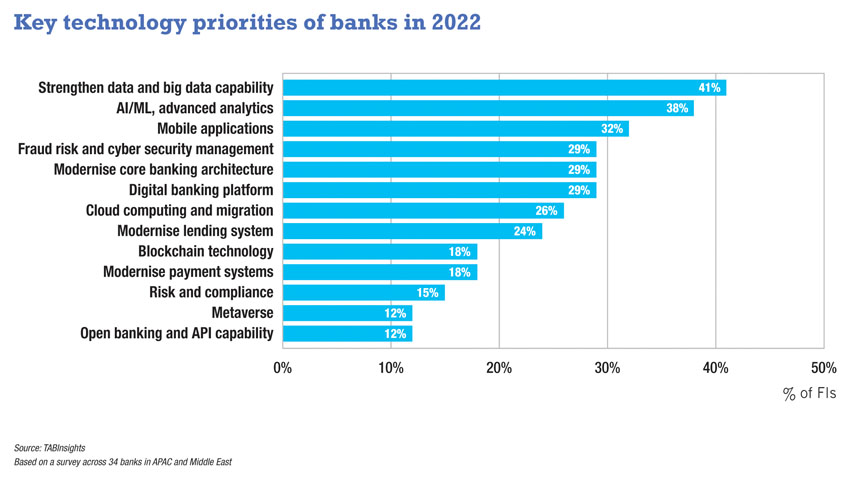
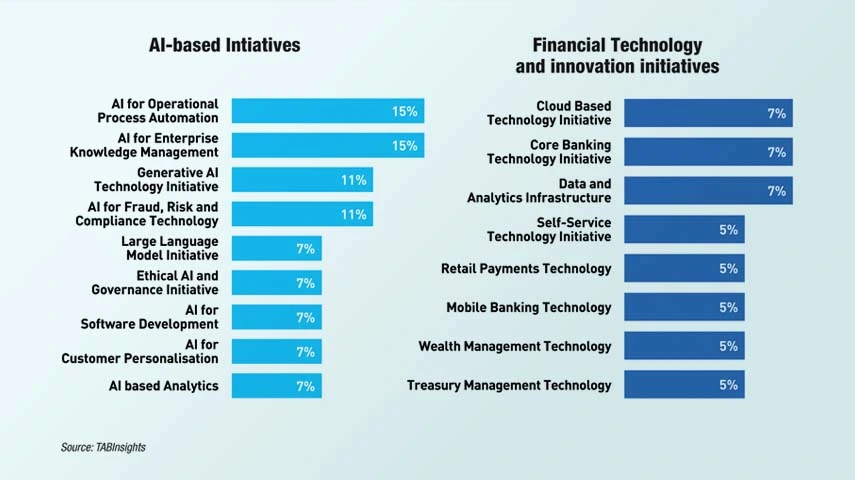
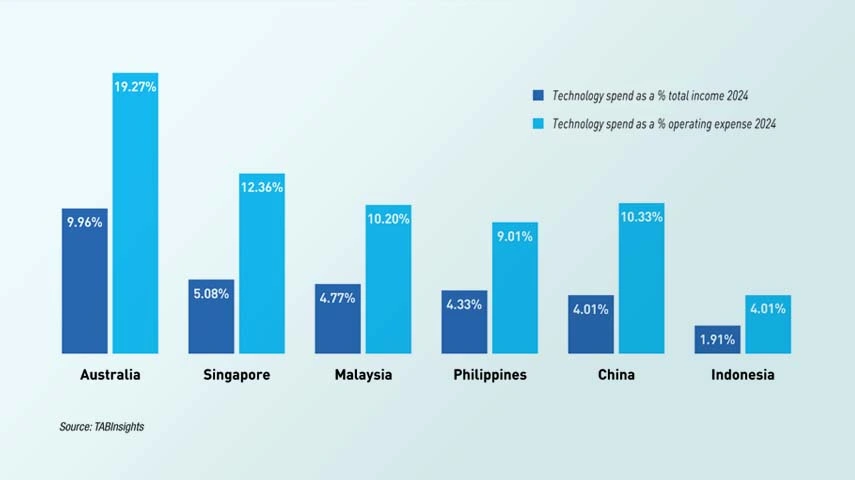
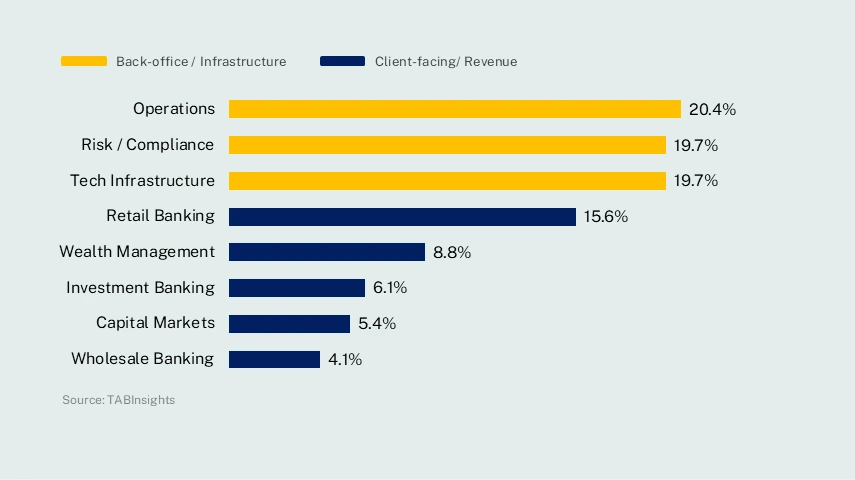
According to a TABInsights survey on technology investment, FI in APAC prioritise data management, advanced analytics and digital banking capabilities
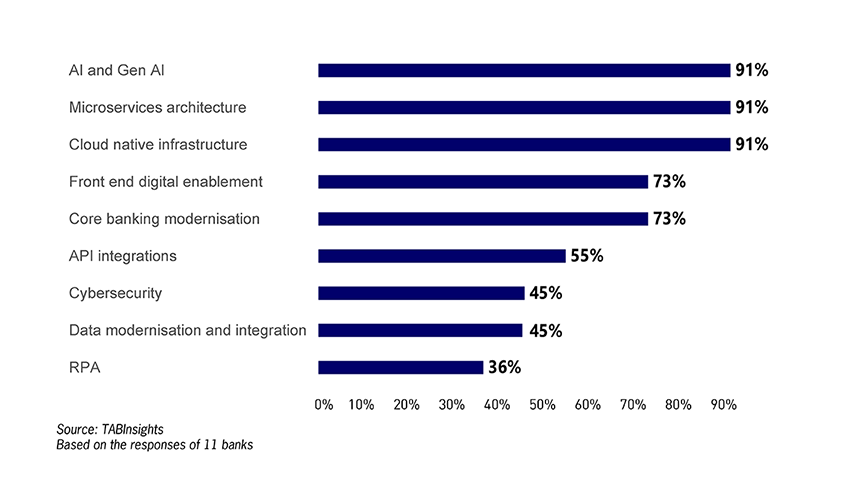
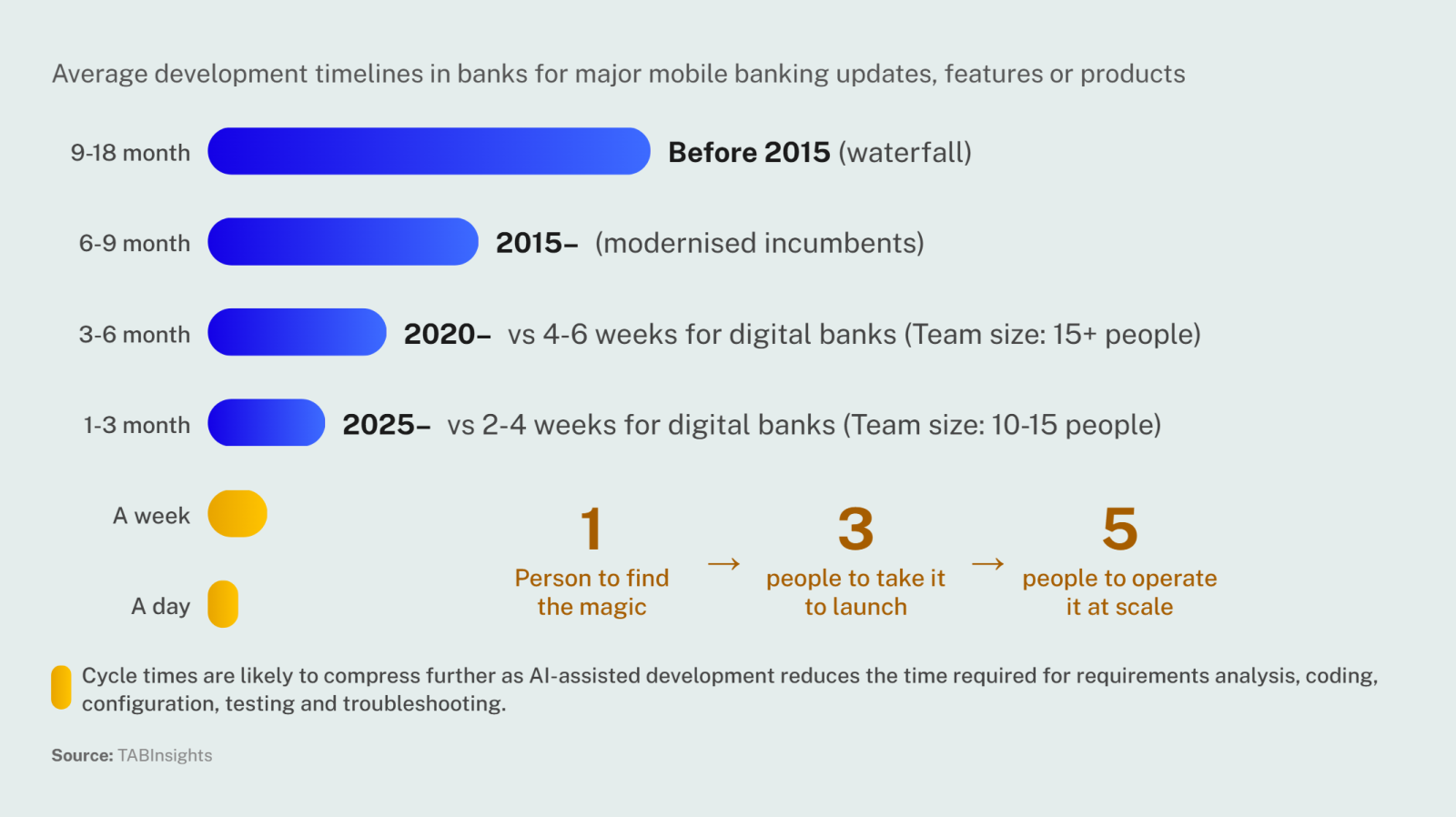
Digital transactions nearing 90% at leading banks reveal core technology deficiencies, prompting over 50% in Asia Pacific to adopt microservices for enhanced agility and scalability
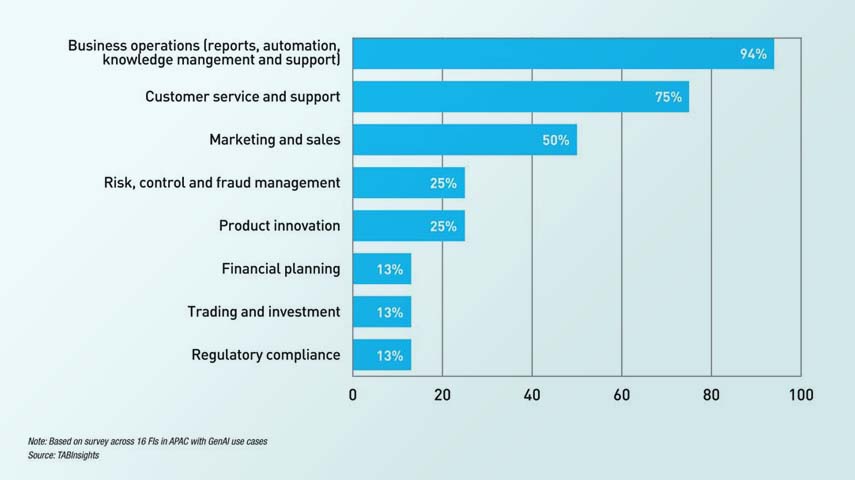
While leading financial institutions are rapidly integrating GenAI into operations to enhance efficiency, challenges in model reliability, data integrity, and compliance hinder implementation and scalability.
Driving World-Class Bank Transformation in Asia Pacific, a recent report by TABInsights and FIS, highlights how leading banks are rearchitecting core systems to compete in a digital-first, AI-driven world.
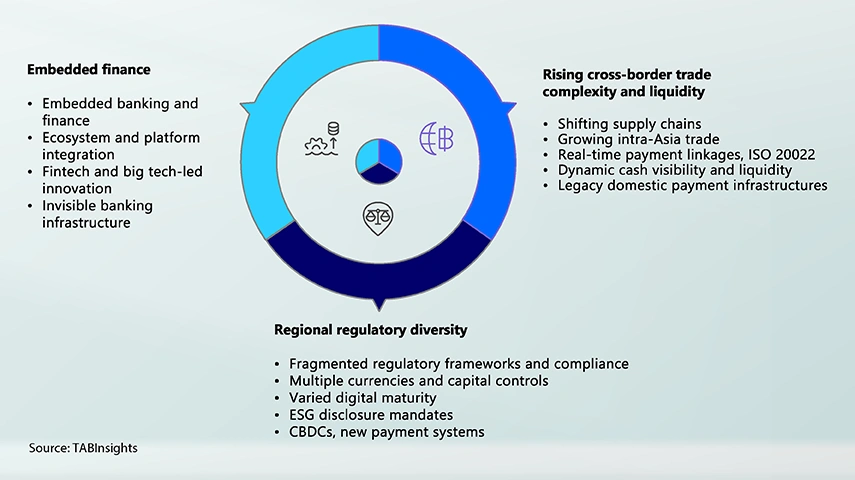
As Asia Pacific’s trade and payment flows accelerate, leading banks in the region are embedding finance into client ecosystems, orchestrating modular platforms and scaling AI for resilient, sustainable growth.
Winning initiatives at the TAB Global Financial Technology Innovation Awards highlight the ongoing reshaping of banking architecture.
Banks in Asia-Pacific are modernising tech architecture for scalability, resilience and innovation, according to senior executives.
An analysis of AI initiatives across 29 Global Systemically Important Banks (G-SIBs) from 2023 to 2025 reveals a sector in structural transition: from experimentation to scaled enterprise execution, from point solutions to platform architectures, and from model access to data control and insights as the primary source of competitive strength. JPMorgan Chase’s decade-long institutional AI build illustrates what that transition looks like at the world's largest, most interconnected and systemically important banks.