
As cybercrime operations become increasingly structured and financially motivated, banks must treat cybersecurity as a strategic business issue. Resilience depends on leadership ownership, real-time coordination, and integration across operations, technology, and customer engagement.
Cyber threats have evolved into complex, well-financed campaigns by criminal networks targeting financial institutions with precision and scale. These groups exploit weaknesses in systems, user behaviour, customer channels, and third-party ecosystems. Banks face mounting pressure to safeguard data, ensure operational continuity, and preserve public trust in a highly exposed digital environment.
Cybersecurity now stands alongside capital, liquidity, and compliance as a foundation of banking stability. It influences a bank’s ability to operate, protect customer data, and meet supervisory expectations. Addressing cyber risk demands executive ownership, integrated controls, and collaboration across departments. The boardroom, not the server room, has become the decision-making centre for cyber resilience.
Threat actors now target trust, not only systems
Cybercriminals are increasingly exploiting professional networks and developer platforms. Chatchawat Asawarakwong, vice chairman and group CISO at Kasikorn Business Technology Group (KBTG), explained how attackers set up fake forums to distribute malware. “They create fake developer pages and ask others to help fix supposedly broken code. Then they convince people to install software that turns out to be malware,” he said. These techniques bypass filters and target bank-managed devices and employees directly.
Aurora Unnanuntana, senior director of technology risk at the Bank of Thailand, noted a rise in large-scale attacks through non-traditional channels. “Distributed denial of service (DDoS) attacks, which overwhelm systems with traffic, and data breaches have increased, particularly through mobile apps, subsidiaries, and third-party providers,” she said. This has expanded the threat landscape far beyond traditional boundaries.
The increase in digital exposure has driven stronger interbank collaboration. Asawarakwong highlighted the Thailand Banking–Computer Emergency Response Team (TB-CERT). “The sector works together through TB-CERT to handle threats in real time and build stronger collective defences,” he said. It has become a vital early-warning and coordination mechanism for financial institutions.
Ransomware attacks involving encryption and data theft have compelled banks to simulate recovery scenarios. “Ensure your data is properly backed up, and test regularly to confirm you can recover it. That makes all the difference,” Asawarakwong said. Resilience now relies on practice and process, not policy alone.
Readiness depends on coordination, not only controls
Technology alone cannot contain cyber incidents. Internal communication and swift coordination often determine whether a breach escalates or is controlled. Nongnuch Tantisantiwong, senior vice president and head of enterprise risk and infrastructure at CIMB Thai Bank, described how response begins with internal clarity. “We need to communicate the facts to our employees as soon as a breach happens. Timely action starts with clear internal information,” she said.
Her team conducts regular escalation drills and communication checks across departments and vendors. These exercises include password resets and escalation rehearsals with third parties. “We track response rates and follow up quickly. We also ensure third-party contracts clearly state what must happen if an incident originates outside the bank,” she said. This ensures that operational dependencies are understood and documented before an incident occurs.
Asawarakwong warned that reputational damage often stems from poor internal messaging. “We must prepare our employees to respond. If someone asks them about an incident, they need to know exactly what to say,” he said. Standardised scripts are prepared for all staff levels.
Unnanuntana reinforced the regulatory requirement for comprehensive planning. “The continuity plan must cover technical protocols, business operations, internal and external communication, and regulatory reporting,” she said. Scenario testing must include executive decision-makers. “If executives do not understand their roles during a cyber crisis, decisions will be delayed,” she added.
Cyber readiness must be embedded across the organisation through simulation, leadership involvement, and clear accountability.
Fraud response must shift upstream to prevent loss
Banks, customers, and digital platforms must coordinate more closely to prevent fraud. Tantisantiwong explained how real-time transaction monitoring interrupts scams. “We interrupt suspicious transactions to give customers time to think and avoid being misled,” she said.
Regulatory approaches are evolving to define shared accountability. “If a bank’s system is compromised, they are fully responsible. If a customer is tricked into taking action, the case is more complex,” said Unnanuntana. The Bank of Thailand is advancing frameworks that clarify responsibilities among banks, telecoms, and platforms. “We need cross-industry standards that clarify where liability lies and how banks, platforms, and customers each contribute to risk.”
Operationally, banks have phased out short message service (SMS) links in favour of in-app messaging, done within the secure banking app to reduce spoofing. “The sector is moving to in-app messaging to reduce scam exposure,” said Asawarakwong. Banks also work with telecoms and regulators to detect and block fraudulent messages at the network level. This coordinated approach reflects a shift toward systemic deterrence.
AI is becoming the new frontline of defence
As fraud tactics become more agile, banks are deploying artificial intelligence (AI) and behavioural analytics for detection. These tools assess user interaction patterns and trigger identity checks when anomalies arise. “If a customer’s behaviour changes, we trigger an additional authentication step to confirm their identity,” said Asawarakwong.
This dynamic model strengthens static authentication like face or fingerprint ID, which can now be spoofed using AI. “It is not about one factor. We combine what you know, what you have, and how you behave,” he said.
Unnanuntana added that the Bank of Thailand supports AI development within governance frameworks. “Our AI guidelines are not about restricting banks. They are designed to promote responsible innovation and safe adoption,” she said. The guidance aligns with international norms and promotes model transparency.
AI is becoming a central part of risk detection and mitigation strategies. Banks that integrate behavioural analytics into core systems will be better positioned to detect fraud, reduce false positives, and intervene early.
CISO leadership now defines institutional resilience
The chief information security officer (CISO) has become a central figure in shaping strategic resilience, not only managing technical risks but guiding security-informed decisions across the organisation. “We integrate security at the design stage, not after systems are built,” said Asawarakwong.
“We are not only technical specialists anymore. We advise the business on how security decisions impact operations and resilience,” he added. CISOs today influence procurement, third-party governance, data privacy, and even how boards allocate risk budgets. Their ability to frame cyber threats in commercial terms determines how effectively institutions prioritise defences.
Tantisantiwong described how her team enforces internal accountability. “We set limits for medium- and high-risk issues and monitor whether teams act within the window,” she said. Her unit also scans social media during incidents to guide communications and flag emerging reputational risks.
Unnanuntana underscored that cybersecurity is no longer the sole domain of IT teams. “Every department must treat cybersecurity as part of its core responsibility, not something handled by a separate team,” she said. Banks are now expected to appoint CISOs with cross-functional mandate and direct access to board discussions.
This structural shift signals that resilience depends not only on robust controls, but also on clear authority, internal influence, and leadership visibility.
Cybersecurity is now a measure of business competence
Cyber threats no longer occur in isolation. They expose weaknesses not only in systems, but in governance, operations, and decision-making under pressure. Maintaining customer trust, meeting regulatory obligations, and avoiding operational disruption now depend on how effectively leadership anticipates and responds to cyber risk.
Cybersecurity has become a strategic pillar shaping how banks design digital services, manage third-party exposure, and engage with customers. Institutions that integrate cyber readiness into executive agendas, product development, and staff culture will be better prepared for disruption.
Brian Lo is a seasoned risk professional with nearly 30 years of experience across global financial institutions. Based in Hong Kong and Singapore, he has led teams in managing market and liquidity risk, counterparty risk, and asset and liability management. His expertise encompasses quantitative modelling, risk governance, stress testing, and regulatory compliance. Brian has also played a critical role in developing internal risk models, driving strategic initiatives, and advising on cutting-edge risk solutions, including AI and machine learning applications. Throughout his career, he has served on multiple risk committees, providing strategic insights to senior management and boards, and has been instrumental in implementing Basel reforms and risk management innovations. Brian’s approach integrates deep technical knowledge with practical leadership, making him a valuable contributor to banking risk management education and practice.
Urs Bolt is a seasoned professional with over 35 years of expertise in wealth management, investment banking, and technology. He helps individuals achieve financial well-being and advises senior leaders in financial services and technology on refining business strategies, developing markets, and forging impactful partnerships. Recognised as a global thought leader in digital banking, WealthTech, and decentralised finance, Urs is an active speaker, author, and jury member for esteemed awards and panels. A passionate advocate for sustainable progress, he champions energy policies that balance economic growth and ecological preservation through scientific solutions.
Sina is Chief Data Officer at Unique AG – a rising European startup providing a GenAI-driven platform called Unique.AI to better understand customers and build more meaningful client relationships. Unique.AI is a tailored solution for the financial industry that aims to increase productivity by automating manual workload through AI and ChatGPT solutions.
Sina is a proven GenAI and data transformation specialist for financial applications with over 20 years of experience. Before Unique AG, Sina led data strategy projects at Credit Suisse AG and worked as a consultant at Accenture AG. She lectures on GenAI, AI Governance, and Data Protection at top universities like HSG St. Gallen and HEC Paris, inspiring future tech leaders. Sina also mentors startups on GenAI applications and serves on the ISO expert council in Switzerland. She was recently honored with the “Women in Banking and Fintech 2024” award for her Thought Leadership on Data Protection and AI Governance for GenAI applications for Financial Services by Handelsblatt (#1 business newspaper in Germany). Sina holds a PhD in Financial Modeling from the University of St. Gallen (HSG, Switzerland) and a Diploma in Economics from the University of Mannheim (Germany).
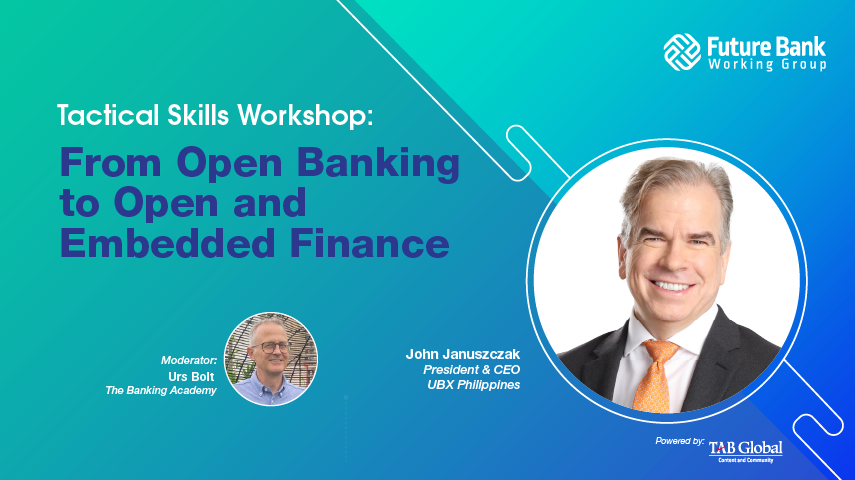
John Januszczak is a seasoned fintech leader and the President & CEO of UBX Philippines, the fintech venture studio and fund of Union Bank of the Philippines. He was appointed to this role after joining UnionBank as a Consultant in 2018. Prior to this, he served as the Chief Operating Officer of Manulife Philippines and held leadership roles such as Head of Global Business Process Management at Manulife Financial and Vice President of Product Management at Meta Software Corporation. His extensive experience in operations, technology, and financial services has positioned him as a key driver of digital transformation in the fintech space.
Under John’s leadership, UBX has grown into Southeast Asia’s fastest-growing fintech, building a robust ecosystem that helps startups and fintech founders access expertise, funding, and customers. He has spearheaded the incubation of award-winning ventures such as i2i, SeekCap, and BUX, while also managing a corporate venture fund that successfully invests in and scales fintech startups. By leveraging corporate ecosystems, open finance, and embedded finance, John continues to drive financial inclusion, innovation, and strategic growth in the Philippine fintech landscape.
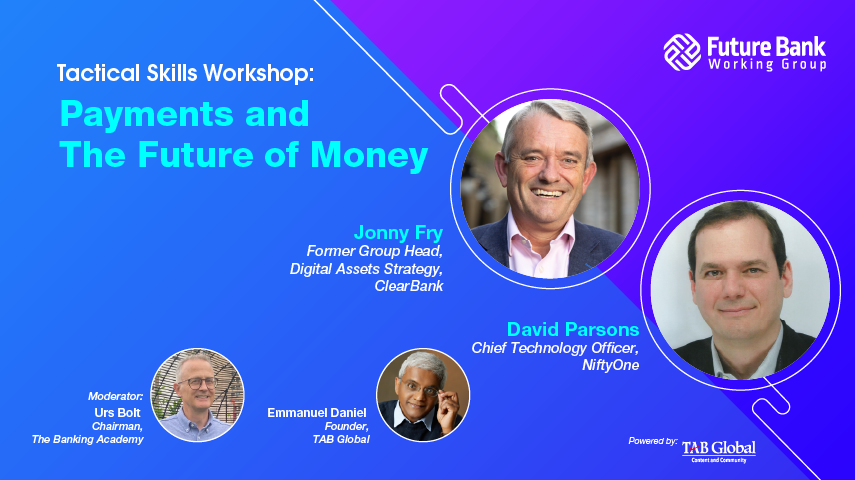
Jonny Fry led initiatives around blockchain and digital assets within the regulated banking environment at ClearBank. With over three decades of experience in financial services, Jonny is widely recognised as a thought leader in digital innovation. He is currently the CEO of TeamBlockchain, Chairman of Gemini Capital UK, and author of Digital Bytes, a weekly publication analysing blockchain developments. At ClearBank, he focused on integrating digital asset strategies to support institutional-grade infrastructure for next-generation financial services. In 2022, he was named CryptoAM’s “Influencer of the Year.”.
David Parsons is an accomplished technology executive with over 25 years of experience leading digital financial infrastructure initiatives across the US and Europe. As Chief Technology Officer at NiftyOne, he drives innovation, technology strategy, and platform development. His expertise spans go-to-market strategies, business development, and regulatory frameworks, underpinned by a strong track record of working with global technology providers, hardware manufacturers, and software developers. David’s strategic vision and hands-on leadership have consistently enabled the successful deployment of scalable, secure, and compliant digital solutions in the financial sector.
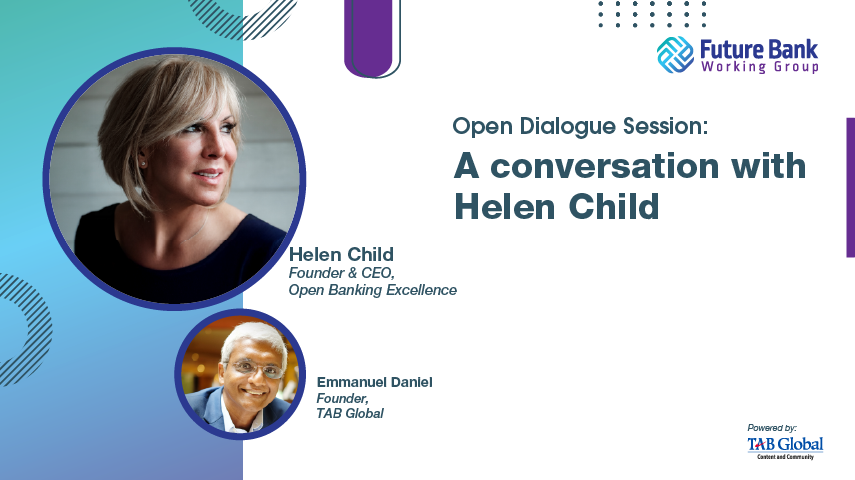
Helen Child is the Founder and CEO of Open Banking Excellence (OBE), the world’s leading community of Open Banking and Open Finance pioneers. With a legacy of innovation rooted in her family’s 400-year history in banking, Helen’s journey includes founding the UK’s first e-Money Licence Issuer to be awarded licences by Mastercard and Visa. She has played a pivotal role in the development of the UK’s Open Banking ecosystem and has become a global ambassador for the movement, advising governments and regulators in emerging markets like Brazil and Saudi Arabia.
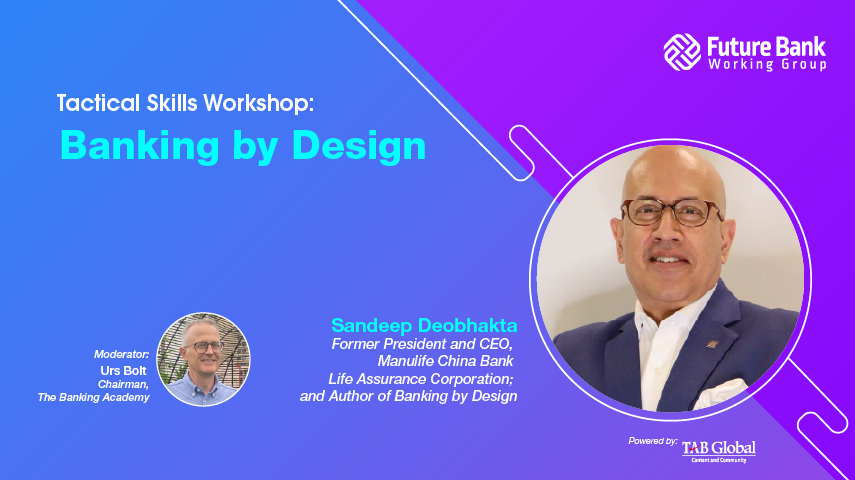
Sandeep Deobhakta is a veteran financial services leader and design innovator with over 35 years of experience spanning banking, wealth management, and bancassurance across ten countries. He has held senior roles at major institutions including Citibank, Shinsei Bank in Japan where he helped transform it into an award-winning digital retail bank using Human-Centered Design and VP Bank in Vietnam, where he drove significant retail banking growth. Most recently, he served as President & CEO of Manulife China Bank Life Assurance Corporation in the Philippines, steering innovation in bancassurance and strategic partnerships.
A champion of innovation at the intersection of finance and design, Sandeep is currently pursuing PhD research focused on AI and Design Thinking in financial services. He is the author of Banking by Design (2024) and teaches fintech at Dai Nam University in Vietnam.
With over 25 years of experience in strategy, finance, banking, and innovation, Rafiza Ghazali currently serves as the CEO of KAF Digital Bank, where she is responsible for the development and operationalisation of the retail/consumer digital bank. She brings deep expertise in corporate finance, Islamic finance, and fintech to her leadership role.
Previously, she was the Group CEO of Cradle Fund, where she played a key role in transforming Malaysia’s early-stage funding and venture capital ecosystem. Her extensive C-suite experience spans across various sectors including consumer products and services, energy, property, and media—where she has contributed to enhancing performance, governance, and sustainability. Rafiza is a Chartered Accountant with the Australian Institute of Chartered Accountants. She also holds a Postgraduate Diploma in Strategy and Innovation from the University of Oxford and a BSc in Economics from the London School of Economics. She is passionate about creating meaningful impact through digital innovation in banking and advancing financial inclusion. She is also deeply committed to fostering a culture of collaboration, diversity, and excellence across her teams and stakeholders.
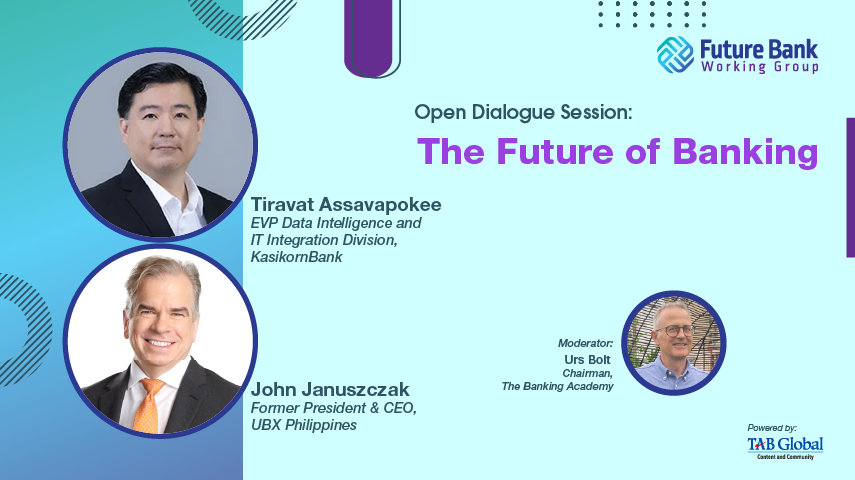
Tiravat Assavapokee is currently the Executive Vice President and Head of Data Intelligent and IT Integration Division at KASIKORNBANK Public Company Limited, one of Thailand’s leading financial institutions. He is recognized as a pioneer in data science and AI transformation in the Thai banking sector, with more than two decades of international and domestic experience in data strategy, analytics, and operations research.
Prior to joining KASIKORNBANK, Dr. Assavapokee held several key leadership positions, including Executive Vice President for Data Innovation at Krung Thai Bank, and Executive Vice President for Business Intelligence at SCB. He also served in various leadership and senior analytics & data science roles at Capital One Bank ,Walmart and Manhattan Associates in the United States.
Dr. Assavapokee began his career in the U.S., where he also served as Assistant Professor in the Department of Industrial Engineering at the University of Houston. With over 21 years of studying and working in the United States and 8 years in Thailand, his career reflects a deep integration of global best practices with local business innovation.
He holds a Ph.D. and M.Sc. in Industrial and Systems Engineering from the Georgia Institute of Technology, another M.Sc. in Industrial and Manufacturing Engineering from Oregon State University, and a B.Sc. in Computer Science from King Mongkut’s Institute of Technology Ladkrabang (KMITL), Thailand.
Dr. Assavapokee is passionate about building data-AI driven organizations, fostering data-AI talent, and advancing responsible AI adoption in financial services.
John Januszczak is the former President and CEO of UBX, the fintech company originally established by UnionBank of the Philippines. Since assuming leadership in 2018, he has transformed UBX into a leading force in open and embedded finance across Southeast Asia. Under his guidance, UBX has processed billions in transactions, empowered more than 250,000 businesses, and forged strategic partnerships with global leaders such as SBI Holdings.
With a career spanning over three decades, John brings a wealth of experience in financial services, technology, and operations. Prior to UBX, he served as Chief Operating Officer at Manulife Philippines and held senior roles at Manulife Financial, MAXIMUS, and Meta Software Corporation. His expertise encompasses global business process management, product development, and digital transformation.
John is also a prominent advocate for financial inclusion and open finance. He chairs the European Chamber of Commerce of the Philippines' Special Committee on Open Finance and Financial Inclusion and has served on the boards of leading fintech and energy firms including PETNET, FinScore, Dragonpay and Solviva.
A native of Canada, John holds a degree in Astrophysics from the University of Toronto. His unique blend of scientific rigor and business acumen positions him at the forefront of fintech innovation in the region. John is a sought-after speaker at major industry events such as InsureTech Connect Asia and the Future Bank Council, where he shares insights on digital transformation, embedded finance, and the evolving fintech landscape.
With over 22 years of experience in transaction banking, treasury, and finance across Asia and the USA, Ankur Kanwar drives strategic growth and innovation in his dual leadership roles. As Head of Transaction Banking for Singapore and ASEAN, he oversees business growth and operational excellence in one of the region's most dynamic markets. In his global role as Head of Structured Solutions Development for Cash Management, he leads a team of experts in creating advanced cash management solutions for clients worldwide.
Ankur has helped large corporates optimise cash and treasury operations and spearheaded the adoption of transformative digital solutions to meet evolving industry needs. Before joining Standard Chartered, he held senior roles at JP Morgan Chase in Singapore and New York, leading transaction banking regulatory products and enhancing liquidity structures for corporate clients. His expertise in regulatory insights, treasury management, and balance sheet optimisation makes him a key influencer in transaction banking across ASEAN and beyond.
Allen Ng is Group Head and Principal Economist at the ASEAN+3 Macroeconomic Research Office (AMRO). He leads the Regional Surveillance group, which is responsible for the annual flagship ASEAN+3 Regional Economic Outlook and related updates.
He was previously the Chief Economist of Securities Commission Malaysia (SCM), where he was also a member of the International Organization of Securities Commissions’ Committee on Emerging Risks and a board member of the Institute for Capital Market Research Malaysia. Prior to SCM, Allen was Director of Research at Khazanah Research Institute, and before that he spent more than a decade in the Central Bank of Malaysia.
Sebastien joined Deutsche Bank in 2010 and currently leads Institutional Cash & Trade for APAC, based in Singapore. He oversees cash and trade businesses for institutional clients across the region, supported by a team of 50. Previously, he headed Trade Finance Distribution for APAC and led the Distribution franchise for the Middle East & Africa. With experience spanning Europe, Russia & CIS, and MEA, he has managed syndications and trade finance across major markets. Before Deutsche Bank, he spent nine years at BNP Paribas, focusing on loan syndications in the oil, gas, and commodities sectors.
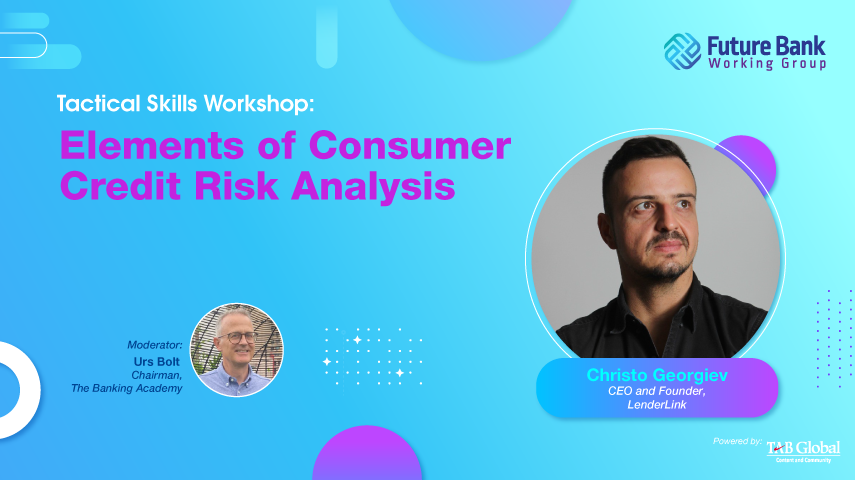
Christo Georgiev is a seasoned financial technology executive with a strong track record in driving business growth and operational excellence across Southeast Asia. He is the founder and CEO of LenderLink, a company focused on advancing credit and lending innovation.
From 2019 to 2024, Christo served as Group COO and Country Manager (Philippines) at FinScore, a leading alternative credit scoring company. Under his leadership, the firm achieved 100% year-on-year revenue growth, forged strategic partnerships with over 30 top-tier financial institutions, and significantly broadened its market footprint and data capabilities. He led initiatives that processed millions of alternative data points monthly, advancing financial inclusion for the underbanked and unbanked.
Christo played a key role in raising $1.9 million from investors, including UBX Ventures (UnionBank of the Philippines’ CVC arm), and co-led FinScore’s successful exit to CTOS Digital of Malaysia in 2023. Following the acquisition, he remained with the company through its transition before stepping down in 2024 to launch LenderLink. Since 2012, Christo has held leadership roles across Operations and Business Development in Southeast Asia, building a reputation for strategic impact and execution in emerging fintech markets.
Frankie Shuai is the APAC Chief Information Security Officer (CISO) at DWS, Deutsche Bank Asset Management, with over two decades of experience in Financial and IT industries. As a seasoned leader, he previously directed cyber and technology risk at UBS for Singapore, Australia, and New Zealand, and has held positions at Citibank, Microsoft, and HP. Frankie is renowned for bridging the gap between cybersecurity and business agendas, evidenced by his frequent speaking engagements at industry events. His commitment to digital transformation and innovation is underscored by a patent for next-generation wireless networking filed with the United States Patent and Trademark Office, where he serves as the sole inventor. In his current role at Deutsche Bank Asset Management, he leads regional Information Security, contributing significantly to the institution's cybersecurity resilience.
David Gee is a distinguished former Global Head of Technology, Cyber, and Data Risk at Macquarie Group, celebrated for his transformative leadership across multiple industries and geographies. With over 25 years at the helm as CIO and CISO, including pivotal roles at HSBC Asia Pacific and MetLife, David has been instrumental in driving major digital transformations. He is notably recognized as the CIO of the Year 2014 for his strategic overhaul at Credit Union Australia, significantly enhancing their core and digital banking platforms. His latest book, The Aspiring CIO & CISO, published in July 2024, is a comprehensive guide for emerging leaders aiming to excel in top IT roles, offering strategies to develop leadership skills, build personal brands, and navigate executive challenges effectively.
Stephen Tjokro is a Business Development Director, Global Fraud Solutions at GBG. He has a keen interest in fraud management, cybersecurity, digital risk protection and enterprise software. With deep expertise in fraud management, he helps businesses navigate fraud risk challenges in an evolving digital landscape. Beyond his professional expertise, Stephen prioritises fitness and stays informed on emerging technology advancements, ensuring he remains at the forefront of innovation.
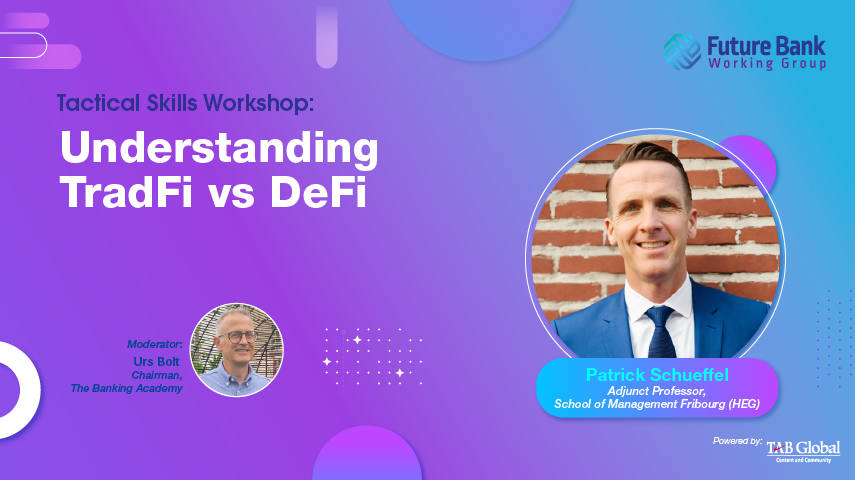
Patrick Schueffel is an adjunct professor at the School of Management Fribourg (HEG) in Switzerland, where he specialises in fintech, entrepreneurship in banking and finance, and innovation. His academic work is complemented by extensive professional experience in the financial services industry, having held senior and C-level roles at institutions in Switzerland and Liechtenstein, including Chief Operating Officer positions at Sora Bank and Saxo Bank (Switzerland). Earlier in his career, he served as a senior manager at Credit Suisse’s headquarters in Zurich, where he led a global innovation team.
Dr Schueffel also represented HEG Fribourg internationally during a three-year assignment in Singapore. His research has been widely published in leading academic journals and practitioner outlets, making a significant contribution to the fields of financial innovation and international business. He holds a doctorate from the University of Reading/Henley Business School, and postgraduate degrees from the Norwegian School of Economics (NHH), the University of Mannheim, and Henley Business School.
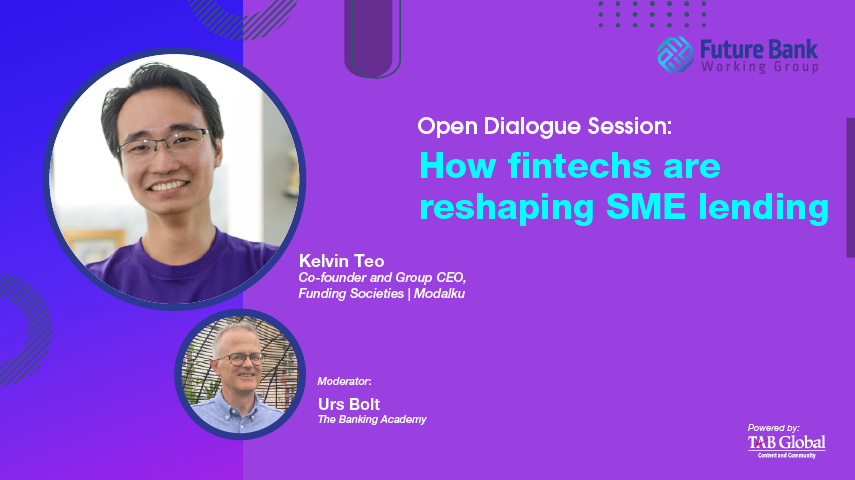
Kelvin Teo is the co-founder and Group CEO of Funding Societies | Modalku. He has been a key member of the Singapore FinTech Association’s Digital Finance Subcomm since 2018 and recently named by the Association as among the Top 12 Fintech Leaders in Singapore in 2020. As one of the Top 200 FinTech Influencers in Asia, Teo has spoken at major conferences such as LendIt Shanghai, Boao Hainan and Money20/20. He has also been featured on Bloomberg, BBC and Business Times. Prior to this, Teo served as a consulting professional at KKR, McKinsey and Accenture.
Mai Kaneko leads international business and marketing at DeCurret DCP, a Japanese fintech firm operating a multi-bank network for tokenized deposit under the DCJPY framework. She oversees international expansion initiatives, bank-fintech partnerships and global go-to-market strategy. She holds a Master’s in International Relations from Georgetown University and a Bachelor’s in Economics from University of Tokyo.

Kinoshita has been involved in product development projects across a wide range of industries in Japan, including e-commerce, retail, banking, insurance, and manufacturing. He joined DeCurret DCP in 2024, where he has been engaged in the development of digital currency infrastructure. In addition to building the underlying infrastructure, he supports digital transformation (DX) initiatives associated with the adoption of digital currency solutions across various industries, and promotes projects aimed at enabling cross-border transactions.

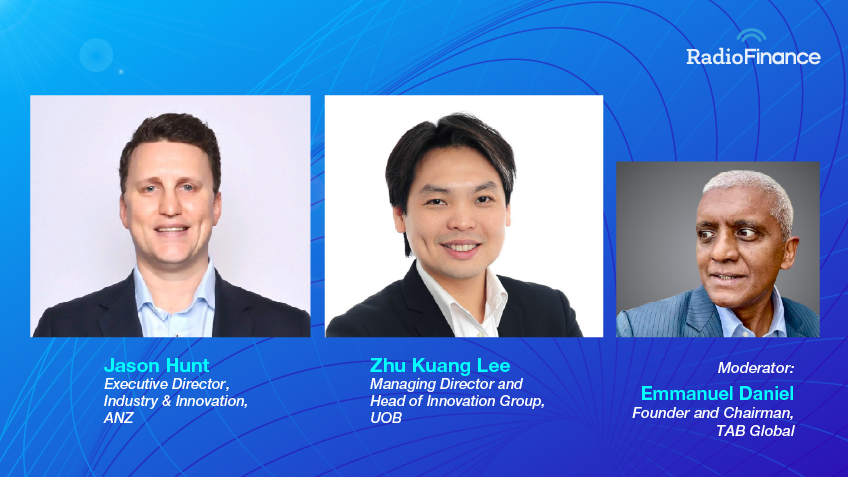
Jason Hunt works within ANZ's Industry & Innovation function, engaging with industry challenges, trends and disruptive technologies across payments, digital assets, platforms and data-driven solutions. ANZ was a participant in Project Acacia, the joint Reserve Bank of Australia (RBA) and Digital Finance Cooperative Research Centre (DFCRC) initiative exploring digital money in wholesale tokenised asset markets, which concluded with its final report in May 2026. ANZ has also previously issued its own Australian dollar-denominated stablecoin, A$DC, to settle a real-money digital asset transaction.

Zhu Kuang Lee leads UOB's Innovation Group, formed in April 2025 to consolidate the bank's work across digital assets, data management, blockchain and enterprise artificial intelligence. He represents UOB in regional digital money and tokenisation initiatives, including collaboration with the Monetary Authority of Singapore (MAS), and has described the bank's approach as embedding compliance into system design from the outset rather than adding it later.

Abhinav is currently based in Singapore and leads Client solutions and Sales for Partior. In this capacity, he oversees clients' journeys including commercial and central banks, from defining use cases to product integration. Before taking on this role, Abhinav gained extensive experience working with both global and local banks. He spearheaded transformative initiatives in Payments and Core Banking, requiring him to coordinate efforts across business units, technology teams, and regulatory bodies. Abhinav played a pivotal role in implementing Faster Payments projects throughout Asia, including notable projects like Singapore G3 Fast, Malaysia Duit Now, and Hong Kong FPS. Prior to his tenure in the banking sector, Abhinav served as a Payments Financial Services consultant to various banks and payment fintech companies such as ANZ, Deutsche Bank, and Bank of America. Originally from India, Abhinav holds an Engineering degree and a Postgraduate qualification in Machine Learning and Artificial Intelligence. He is also a dedicated father of two, and he enjoys spending his weekends playing tennis and cherishing moments with his family.

Sakae Hamasaki joined Sanwa Bank (currently MUFG Bank) in April 1993 and worked in corporate banking across five domestic locations. From 2006 onward, he gained extensive experience in the planning, development, and sales of payment-related services for corporate clients in Japan and overseas. He joined DeCurret DCP in 2022, where he has been leading initiatives to support banks in evaluating the adoption of tokenized deposits, as well as collaborating with overseas partners to build cross-border networks utilizing tokenized deposits.

You're just one step away from unlocking this content.
Become a Member today for full access.
Anouska Ladds is Executive Vice President of Commercial & New Payment Flows, Asia Pacific at Mastercard, based in Singapore. With over 17 years at Mastercard, she has held senior roles across sales, strategy, operations, market development, consultancy, and product development, spanning Asia Pacific, Europe, the Middle East, and Africa. Previously at Barclaycard, she specialised in strategy, customer experience, communications, and SME/acquiring businesses.
David is a seasoned technology executive with significant experience and has over 25 years' experience in CISO and CIO roles across different industries and countries. David has served as a CIO spans across multiple industries and geographies. He was winner Australia CIO of the Year for driving CUA's Transformation. Also, David was CISO for HSBC and Global Head Technology, Cyber and Data Risk Macquarie Group.
A regular conference keynote speaker and thought leader he writes for CIO, CSO, Computerworld and Australian Institute of Company Directors (AICD). His best-selling book - the Aspiring CIO & CISO was published in June 2024 and his second book A Day in the Life of a CISO launched in October 2025 and is already best seller in UK, Singapore, Japan and Australia.

Johnson is a seasoned executive and data and AI leader with over 15 years of experience across the public and private sectors. He is currently Assistant Chief Executive at IMDA, where he helps shape Singapore’s digital future and advance the digital economy. He has held senior data and AI roles in regional banking and global consulting, and began his career in defence and critical infrastructure.

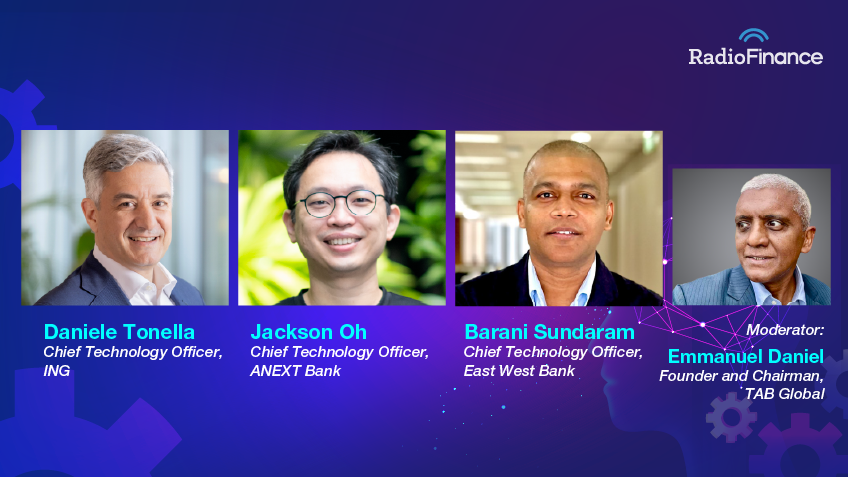
A distinguished leader who has spent over two decades shaping the future of technology and digital finance. Barani Sundaram has held senior leadership positions across Dubai, Singapore, Malaysia, India, and Vietnam, building an impressive track record of delivering large-scale technology transformations across diverse and dynamic markets. As Chief Technology Officer of EastWest Bank in the Philippines, Barani has been instrumental in modernizing the bank's core technology infrastructure, elevating its cybersecurity posture, and championing the adoption of Artificial Intelligence and machine learning. Under his leadership, EastWest Bank has harnessed AI to enhance customer experiences, strengthen fraud detection, and enable data-driven decision-making — while ensuring the highest standards of cyber resilience and regulatory compliance. His strategic vision, technical expertise, and ability to navigate complex challenges have earned him recognition as a pivotal force in shaping intelligent and secure digital banking in the Philippines.

Daniele Tonella is Chief Technology Officer (CTO) and member of the Management Board Banking since August 2024. Daniele is responsible for overseeing and managing the total IT landscape and advising on technology-driven business opportunities. Daniele is a member of the Tech Advisory Board of The Hg Foundation. He holds an engineering MSc from the Swiss Federal Institute of Technology in Zurich (ETHZ) and completed various executive education programmes at Harvard, IMD, INSEAD and MIT Sloan.
Virag Masuraha is a seasoned executive with over 25 years of experience leading Fraud, Financial Crime, and Risk functions for top U.S. financial institutions. He is widely recognized for driving strategic initiatives that reduce costs, enhance profitability, and enable sustainable growth, while successfully managing complex regulatory engagements.
Currently, Virag serves as Managing Director of US AML Financial Crime Modeling at Bank of America. Prior to this role, he held leadership positions at Citi and PNC, where he spearheaded global fraud and anti-money laundering (AML) analytics and modeling functions.
With deep expertise in financial crime and fraud data, analytics, and modeling, Virag has led enterprise-wide strategies in advanced analytics—including big data, AI/ML, entity linkages, network analysis, and machine learning—alongside cyber and digital fraud prevention across consumer and commercial portfolios.
Virag holds an MBA from the Kellogg School of Management and a Master’s in Engineering from Vanderbilt University.
Jackson Oh is the Chief Technology Officer at ANEXT Bank, where he leads the bank’s technology strategy, architecture, and engineering execution as ANEXT scales its digital banking platform for local SMEs and foreign business owners in Singapore.
With close to two decades of experience across banking, fintech, and enterprise technology, Jackson brings a rare blend of deep financial services expertise and hands-on product and platform leadership. Prior to ANEXT Bank, he served as Chief Product Officer at Tribe Fintech and held senior technology and product leadership roles at 360F, SunGard (now part of FIS), AirWatch by VMware, Samsung Electronics, and Bank of America.
Jackson has led large-scale, cloud-native platforms across corporate banking, payments, capital markets, and SaaS environments. He is passionate about building resilient, scalable financial infrastructure, and enabling innovation while meeting the realities of regulatory and operational complexity.