

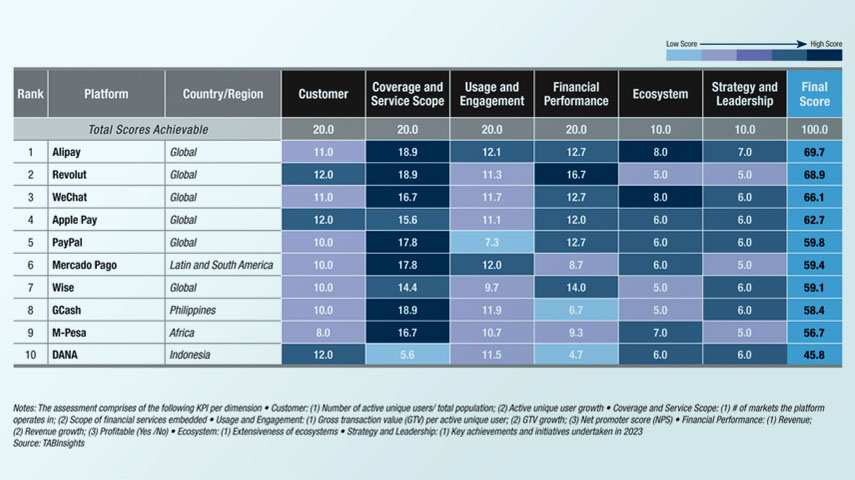
Asia is leading in financial platform development and adoption, with Alipay building a vast ecosystem and global reach, while Revolut excels in user acquisition and financial performance.
Asia Pacific remains the world's least profitable banking region, but a group of small emerging-market banks with assets below $50 billion are delivering outsized returns.

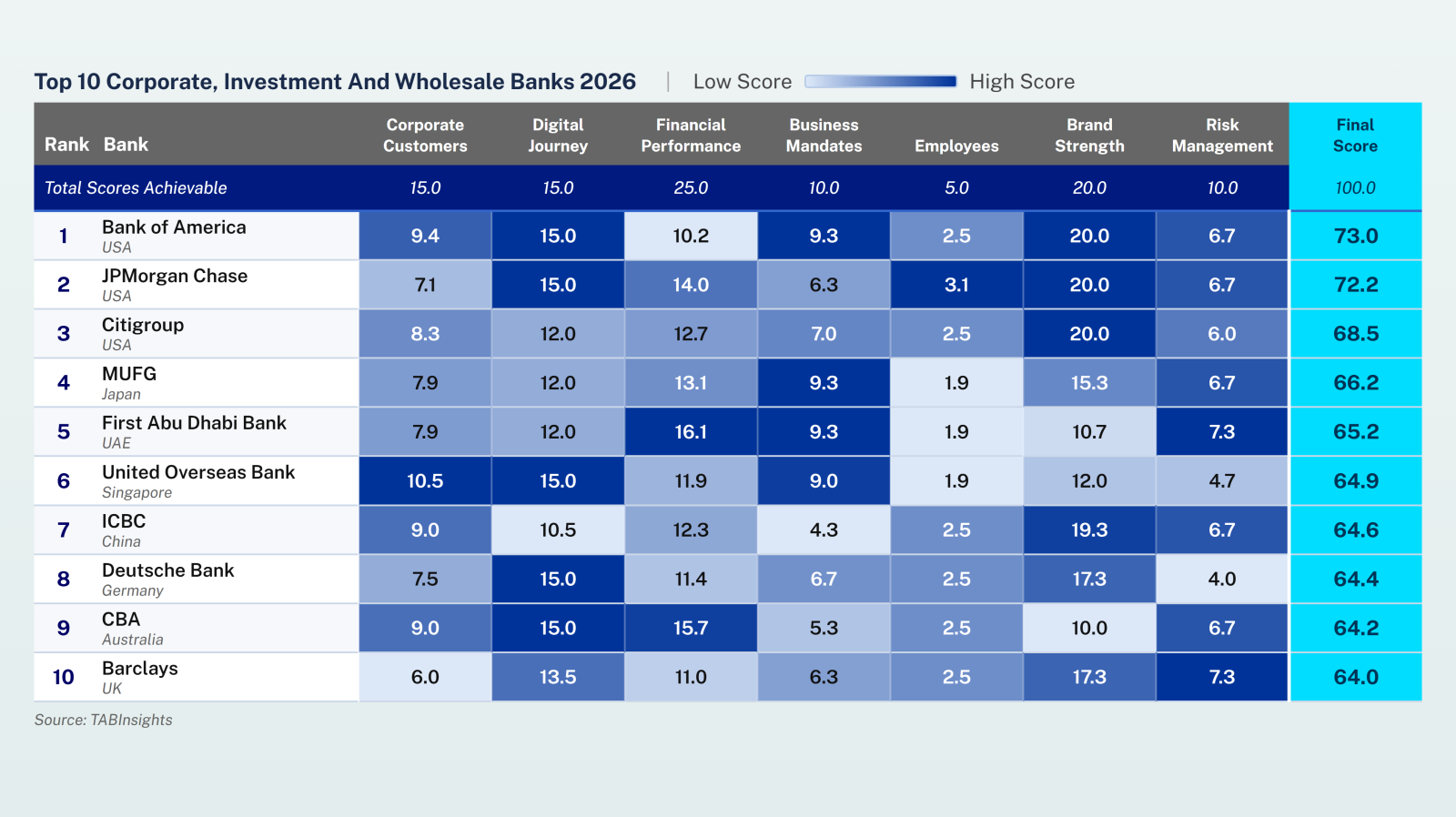
Global CIW banking has entered an execution phase, where rank movement is driven by improvement across multiple dimensions, while the efficiency gap between Middle Eastern and Western institutions widens
Mapping deposit growth against loan growth across the world's 1,000 largest banks reveals that 54% expanded lending faster than deposits between 2022 and 2024. When funding structures and liquidity buffers are also considered, Vietnam and Saudi Arabia emerge as the markets with the most vulnerable banking sectors. This underscores the structural challenge of building strong customer deposit franchises in high-growth emerging markets.
Vietnam's banking sector performance strengthened sharply in the first quarter of 2026, but funding pressures and higher provisions weighed on profit growth. Vietcombank led in absolute profit, while VietinBank and VPBank recorded strong year-on-year gains.
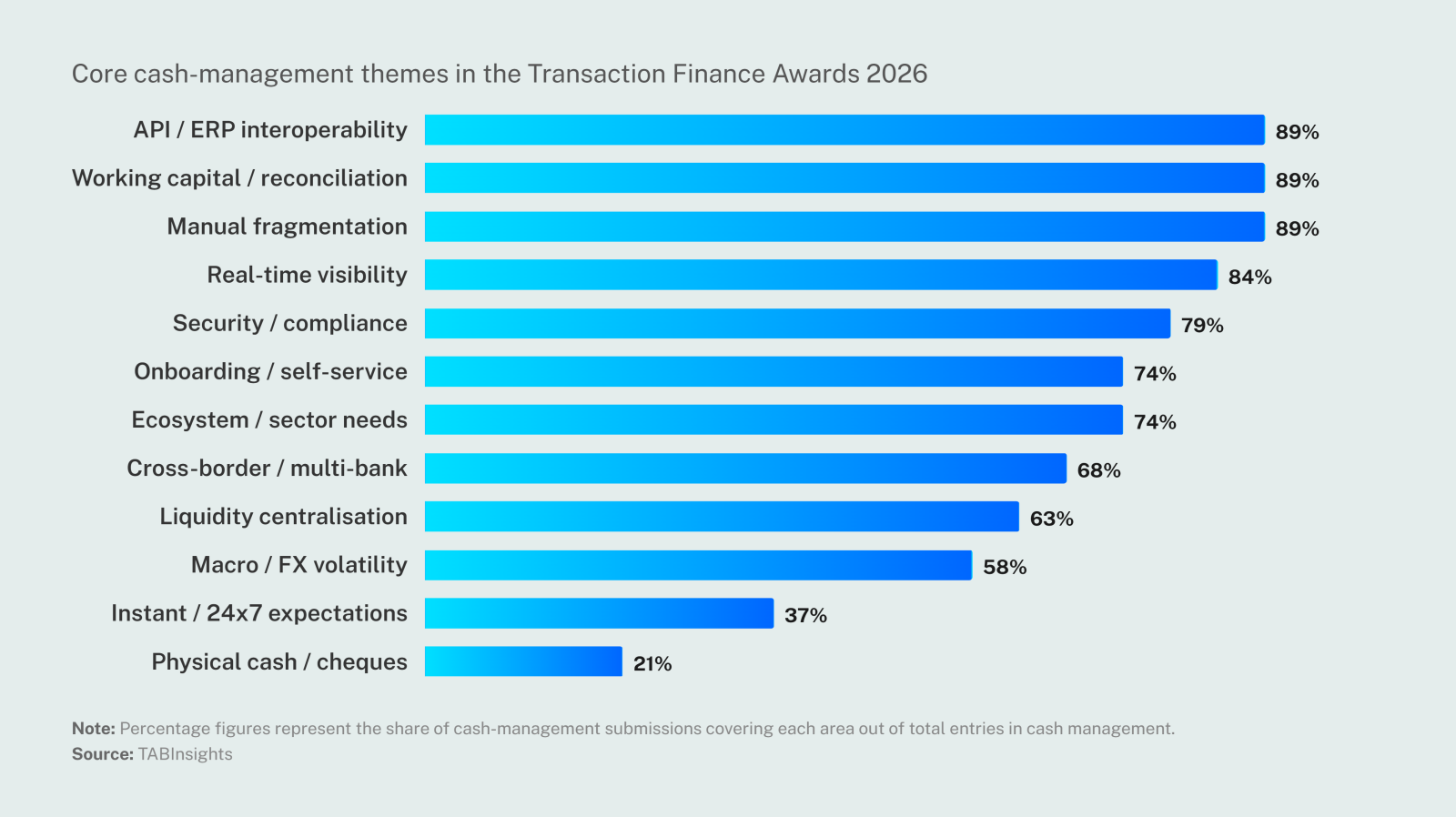
Cash management is moving beyond online banking portals and becoming embedded in companies’ own treasury and accounting systems. Bank submissions show broad investment in real-time data, ERP connectivity and automated controls, but receivables and working-capital processes remain less integrated
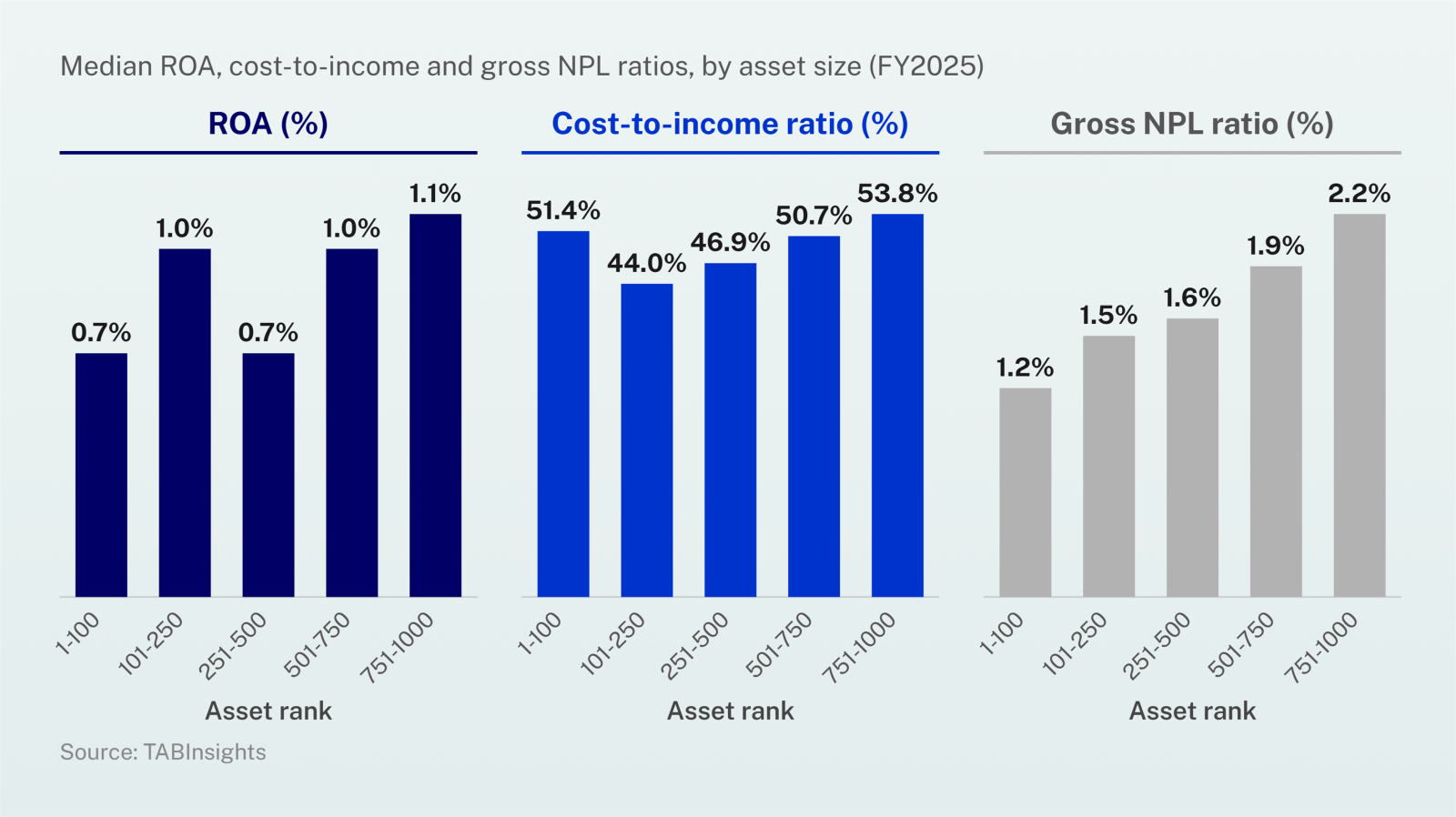
The world’s 1,000 largest banks expanded to $180.7 trillion in assets in FY2025, but cross-tabulation shows that better asset quality is most consistently associated with scale, while greater size does not correspond consistently with faster growth, higher returns or better efficiency.