

Our archives on Europe

Datafiles May 05

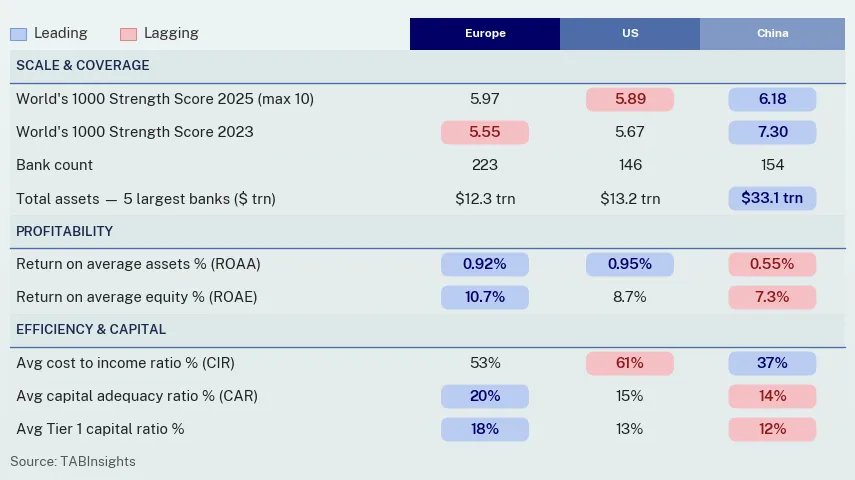
European banks have quietly closed the gap with their American rivals — and, on some measures of institutional strength, surpassed them, according to the World’s 1000 Strongest Bank Ranking. Yet Commerzbank, Germany’s third largest lender by asset size and strongest bank in Europe, illustrates why improved performance alone cannot substitute for structural reform: until the European banking union moves from ambition to architecture, Europe's gains will remain fragile.

Datafiles May 12

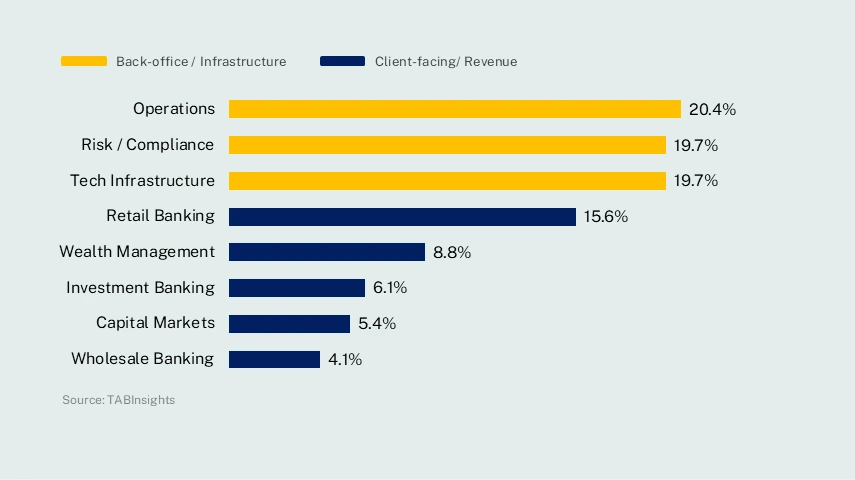
An analysis of AI initiatives across 29 Global Systemically Important Banks (G-SIBs) from 2023 to 2025 reveals a sector in structural transition: from experimentation to scaled enterprise execution, from point solutions to platform architectures, and from model access to data control and insights as the primary source of competitive strength. JPMorgan Chase’s decade-long institutional AI build illustrates what that transition looks like at the world's largest, most interconnected and systemically important banks.

Datafiles May 20

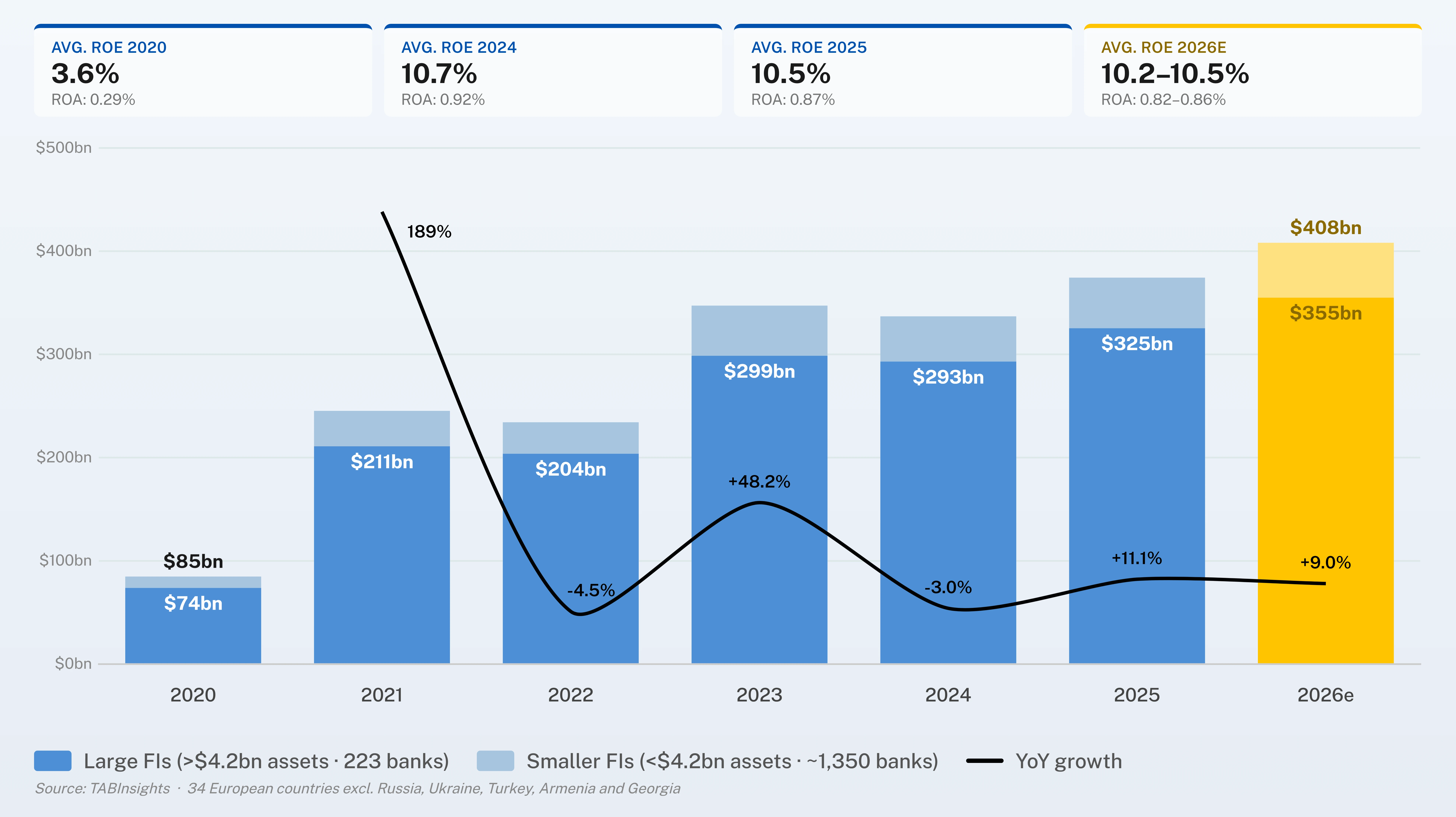
European banks across 34 markets saw net profit grow by a factor of 4.4 between FY2020 and FY2025, driven by post-pandemic recovery and the European Central Bank’s (ECB’s) most aggressive rate-hike cycle in a generation between 2022 and 2023. As these growth tailwinds ease and the International Monetary Fund (IMF) and ECB revise Euro area real GDP growth to between 0.9 and 1.1% in 2026, banks that built structural capacity during the windfall years now demonstrate more stable earnings, with banks in Belgium, Eastern Europe and the Nordics emerging as structural leaders.

Exclusive benefits are on your way. Subscribe and enjoy the benefits.
Chat with us WhatsApp