

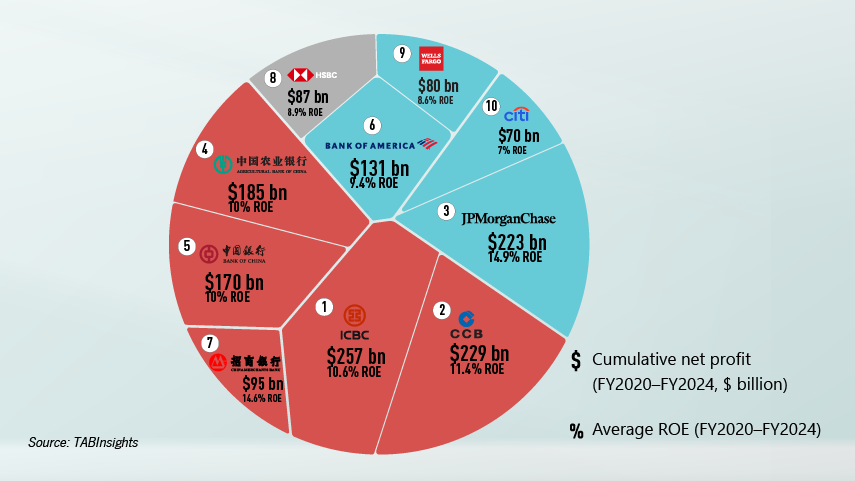
Chinese and US megabanks generate the largest absolute profits through scale and diversification, while emerging-market banks deliver higher — but more volatile — returns on equity.
JPMorgan Chase and Bank of America lead large-bank revenue per employee rankings, while mid-tier banks such as First Abu Dhabi Bank and Saudi Awwal Bank report higher overall productivity levels, supported by focused business models, digital adoption and cost discipline.

Japanese banks record the strongest gains in the market capitalisation ranking, Chinese megabanks retain scale leadership, while Indian and Indonesian lenders lose ground, and Singapore enters the top tier.
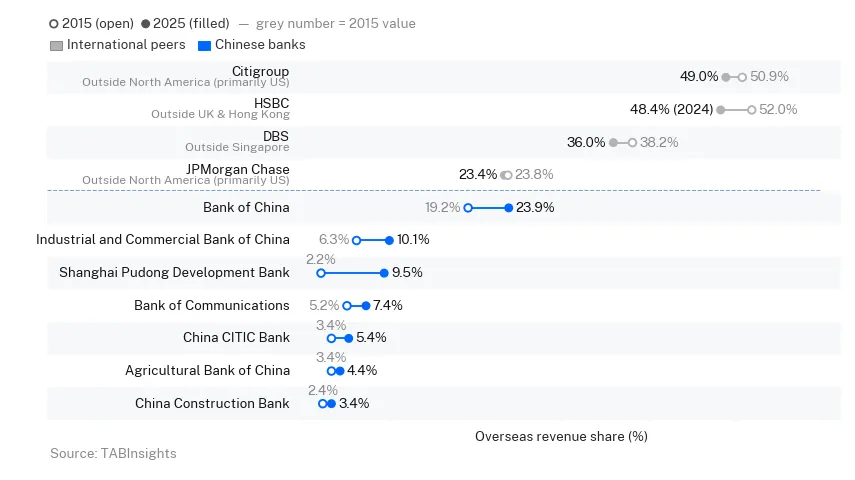
China's major banks are expanding overseas revenue, driven by outbound corporates, renminbi internationalisation and domestic margin pressure. Most earnings, however, remain concentrated in Greater China, highlighting a persistent gap with global peers.
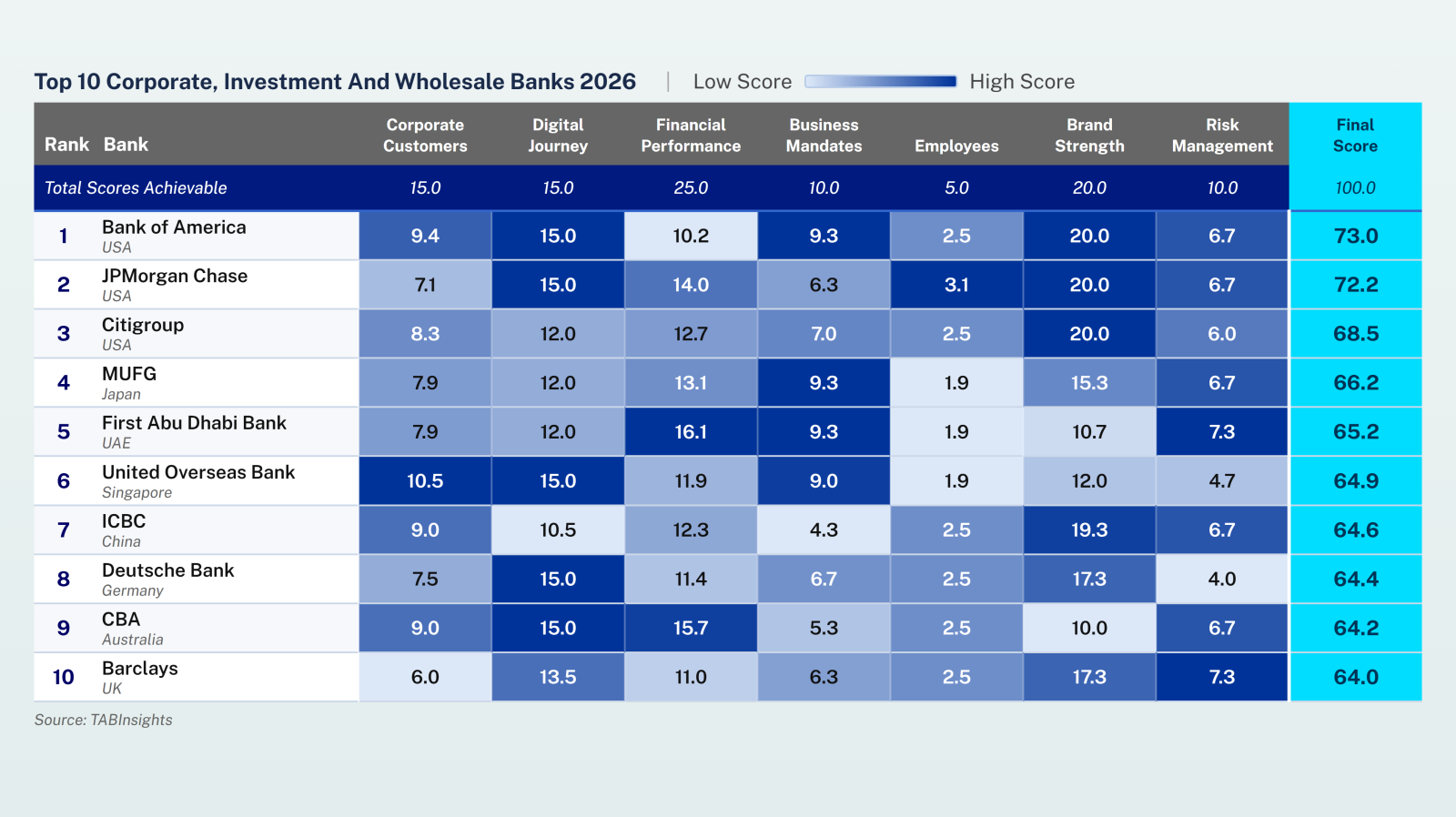
Global CIW banking has entered an execution phase, where rank movement is driven by improvement across multiple dimensions, while the efficiency gap between Middle Eastern and Western institutions widens
Japan’s MUFG claims first place among Asia Pacific's corporate, investment and wholesale banks as Indonesia’s Bank Mandiri records the region's strongest rank improvement on the back of simultaneous revenue growth, profitability and asset quality improvement.
Across 10 banks tracked from 2021 to 2025, Industrial and Commercial Bank of China Asia and Bank of China (Hong Kong) led retail loan expansion with four-year compound annual growth rates of 9% and 5%, respectively, while Nanyang Commercial Bank and China Construction Bank Asia recorded sustained contraction at -7% and -4%.
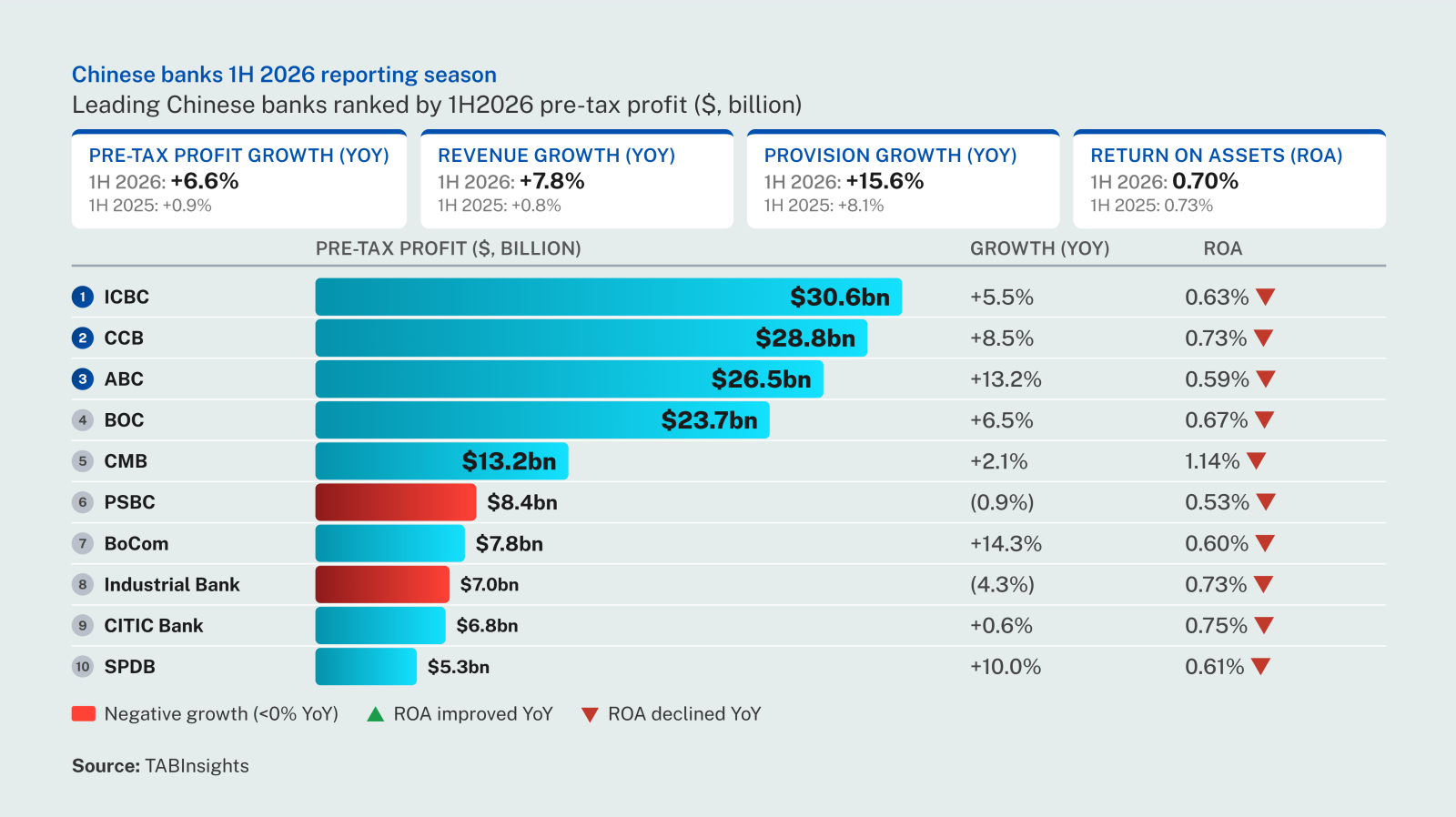
Leading Chinese banks delivered stronger earnings growth in the first half of 2026 (1H2026), but weaker loan demand, rising credit costs and continued pressure on asset yields kept returns under pressure.
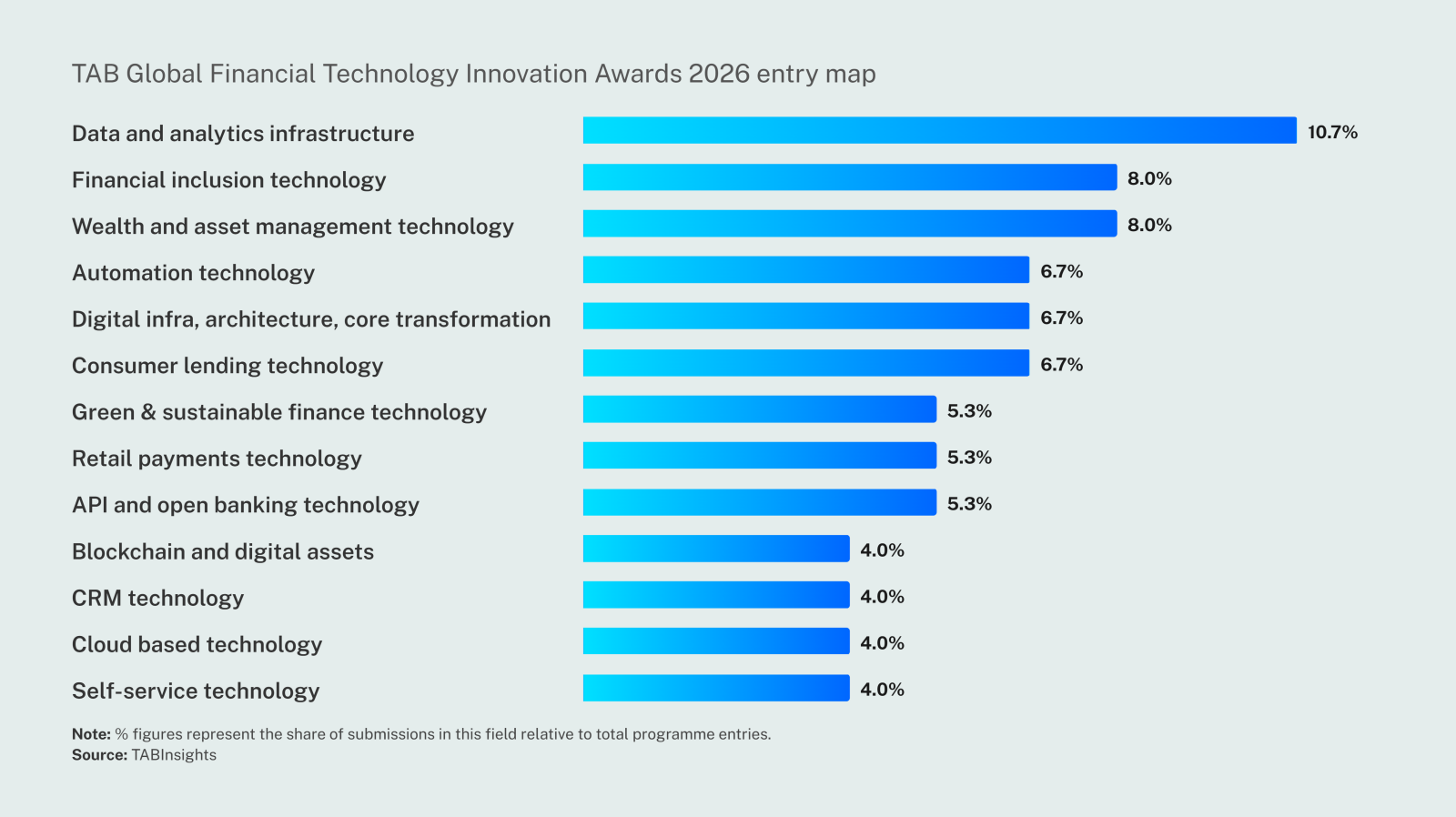
Key emerging trends from this year's awards show the industry's centre of gravity shifting to the foundations — data, architecture, resilience and rails — that will decide which banks can move fastest.
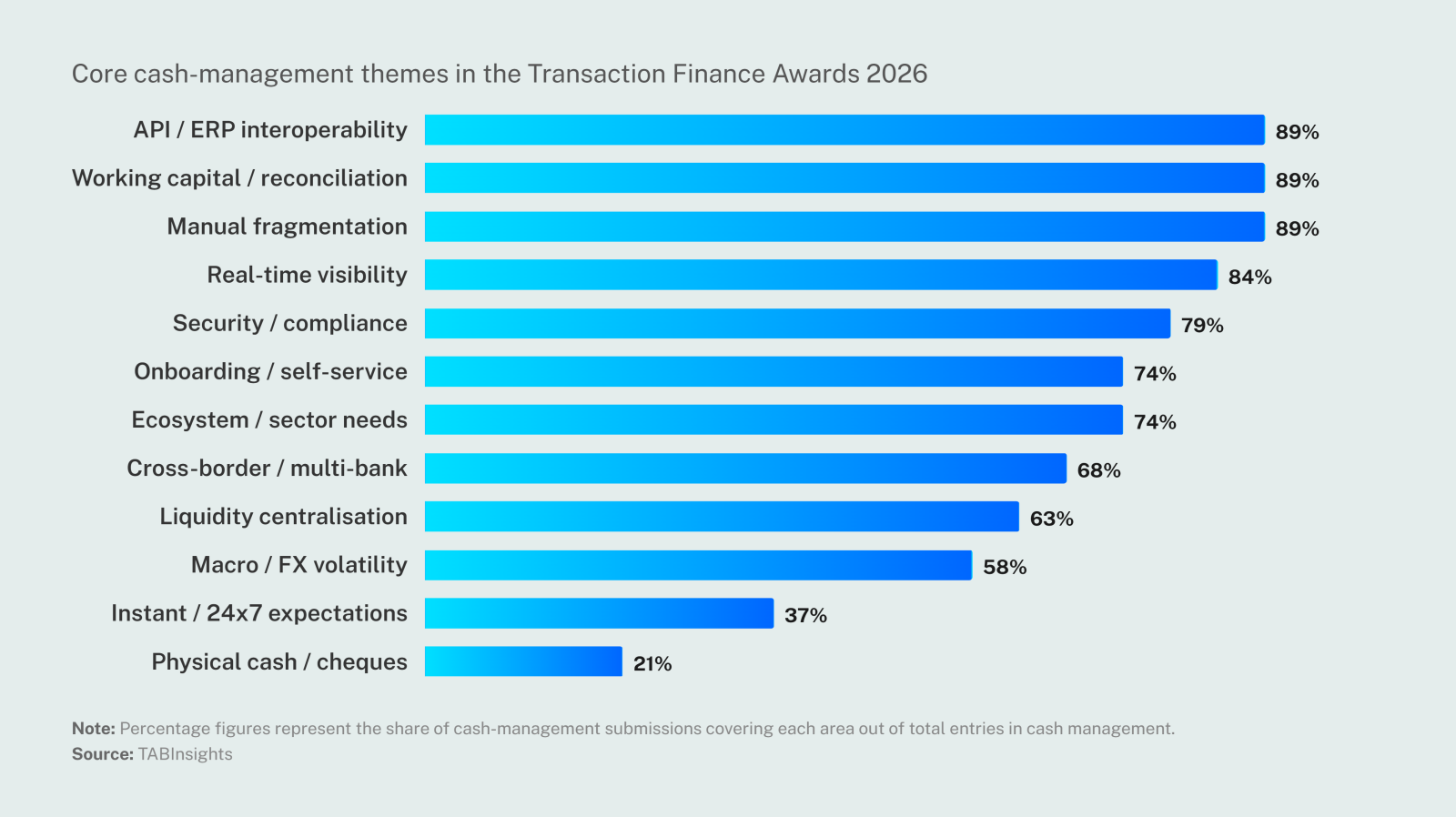
Cash management is moving beyond online banking portals and becoming embedded in companies’ own treasury and accounting systems. Bank submissions show broad investment in real-time data, ERP connectivity and automated controls, but receivables and working-capital processes remain less integrated
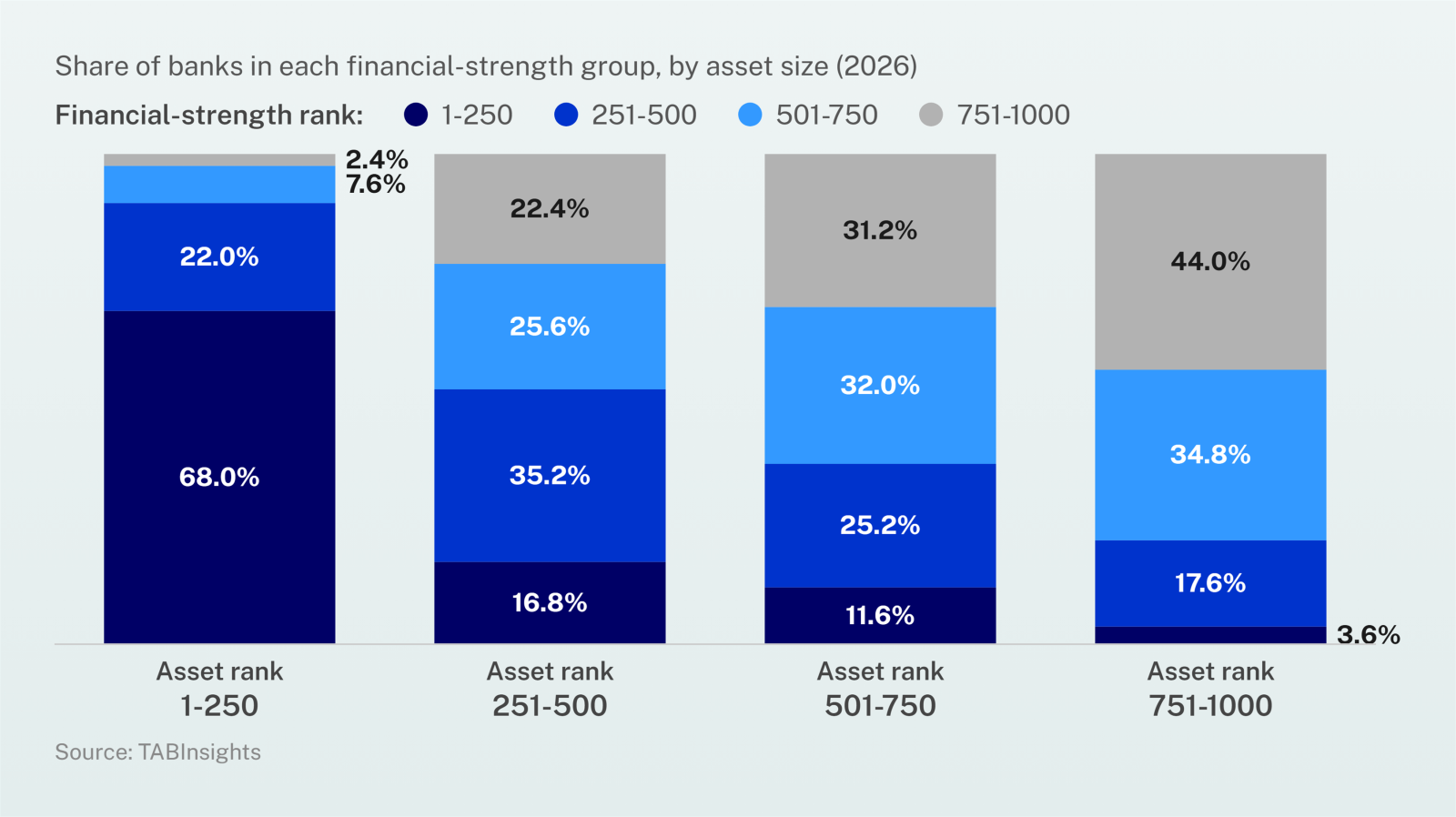
Scale is strongly associated with financial strength, but the TAB Global 1000 World’s Strongest Banks 2026 ranking shows that size is only part of the picture. Some smaller institutions substantially outperform their positions by assets, while exceptional profit growth and increasingly large regulatory liquidity buffers do not necessarily correspond with greater overall strength.
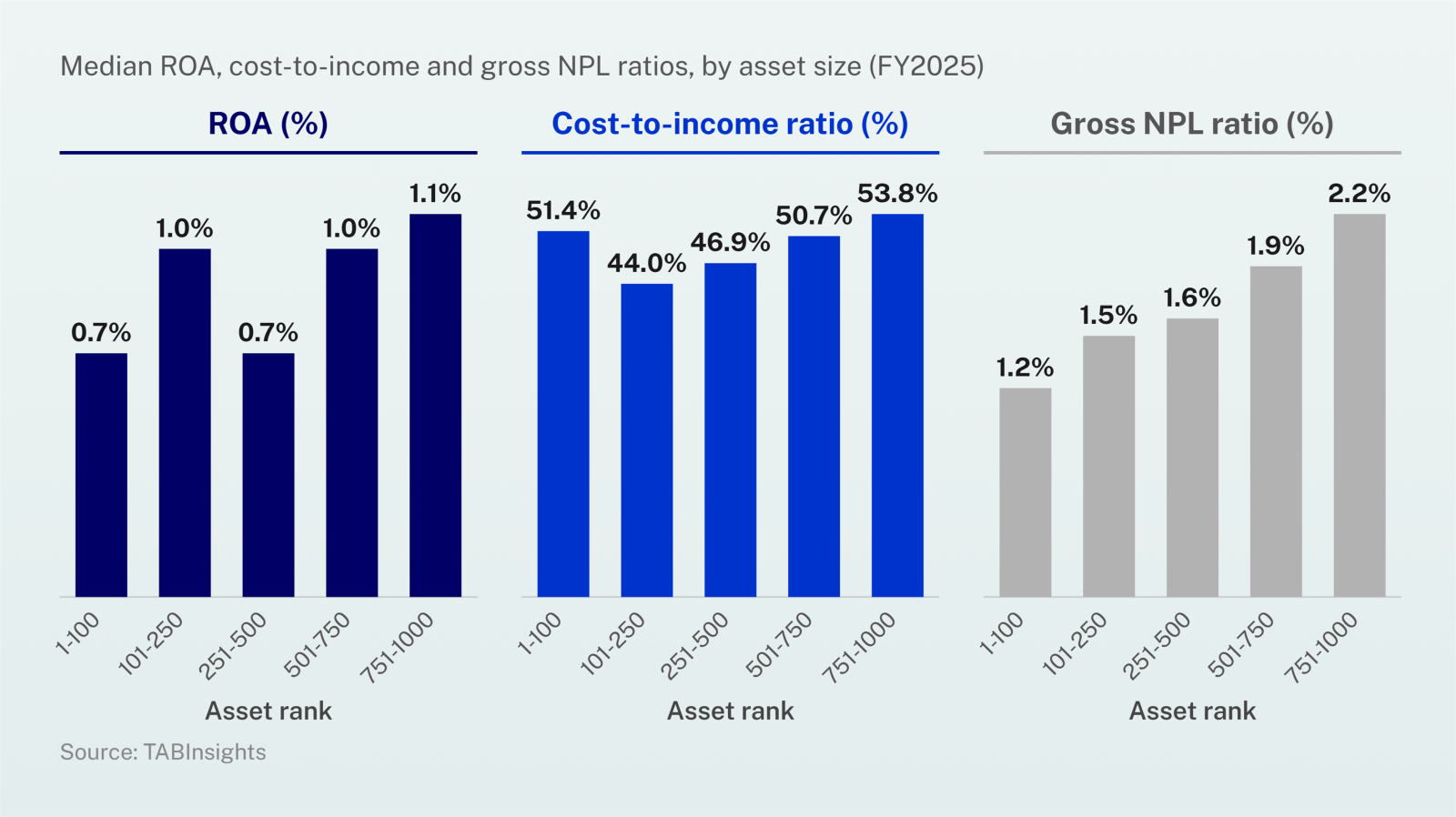
The world’s 1,000 largest banks expanded to $180.7 trillion in assets in FY2025, but cross-tabulation shows that better asset quality is most consistently associated with scale, while greater size does not correspond consistently with faster growth, higher returns or better efficiency.